
From Brief to Brand:
Designing a Landing Page That Makes You Want What You Can't Have
Case study no. 03 — the third in an ongoing series where I take a fictional brief and build it like it's real.
Some briefs hand you a problem to solve. This one handed me a feeling that you can play around with and engineer in a brand new concept.
DailyUI prompt 003 was simple on the surface: design a landing page. But a landing page for what? And designed to do what, exactly? The best landing pages aren't just pretty screens — they're conversion mechanisms with a point of view. So that's what I set out to build.
The result was Maison Interdit. A fictional high-fashion label whose entire strategy is built on one irresistible concept — you probably won't get in.
The concept: desire through restriction
Most e-commerce designs try to remove friction. Maison Interdit deliberately adds it.
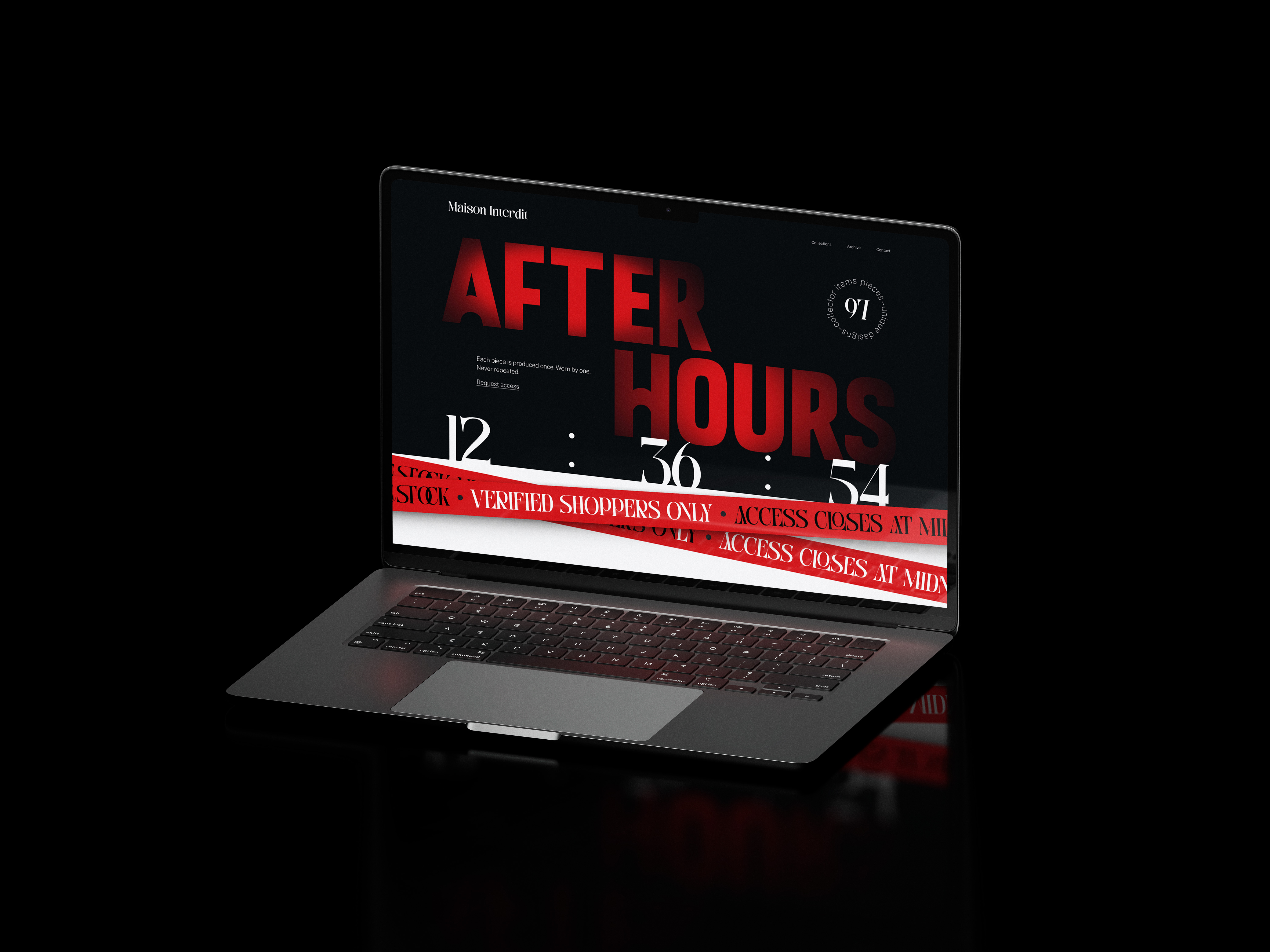
Visual language: type as architecture
The hero is built almost entirely from typography. "AFTER HOURS" in an oversized condensed display font, bleeding off both edges of the screen in deep crimson against black. No hero image. Just letters, scale, and the suggestion that something is happening you might not be allowed to see.
The secondary typographic moment — "SUPPOSED TO SEE" crashing across the split-screen section, overlapping the editorial photography — is where the design gets genuinely unusual. The type doesn't sit on top of the image. It interrupts it. That kind of visual tension is what separates editorial UI design from standard web design.
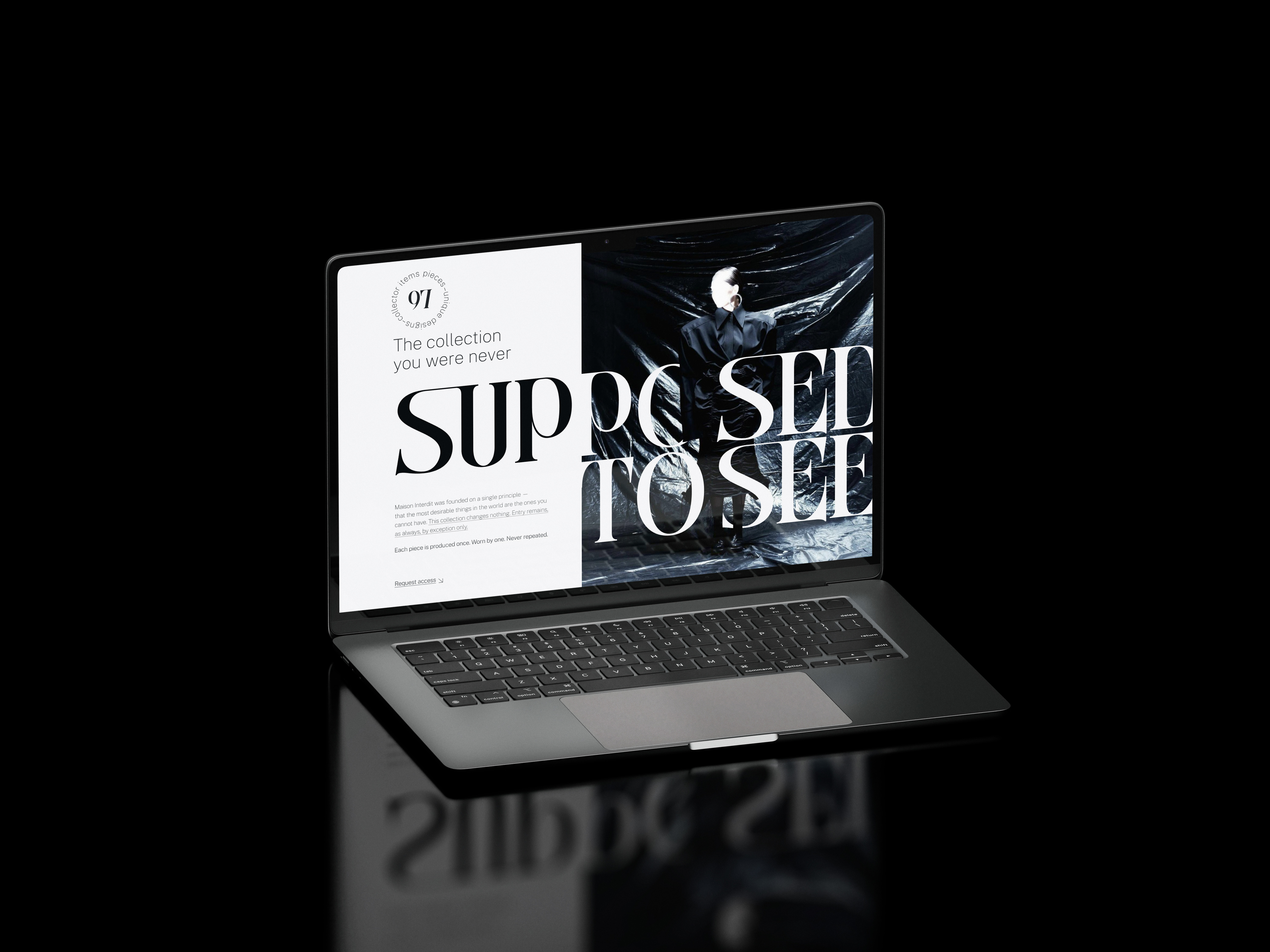
Finding the right imagery
Standard stock libraries weren't going to cut it here. Maison Interdit needed photography that felt like it came from an actual fashion house — movement-blurred, high-contrast, slightly unsettling in the best way. That meant exploring platforms like Cosmos and Stills — unconventional databases that curate imagery with a far more editorial, art-directed sensibility.
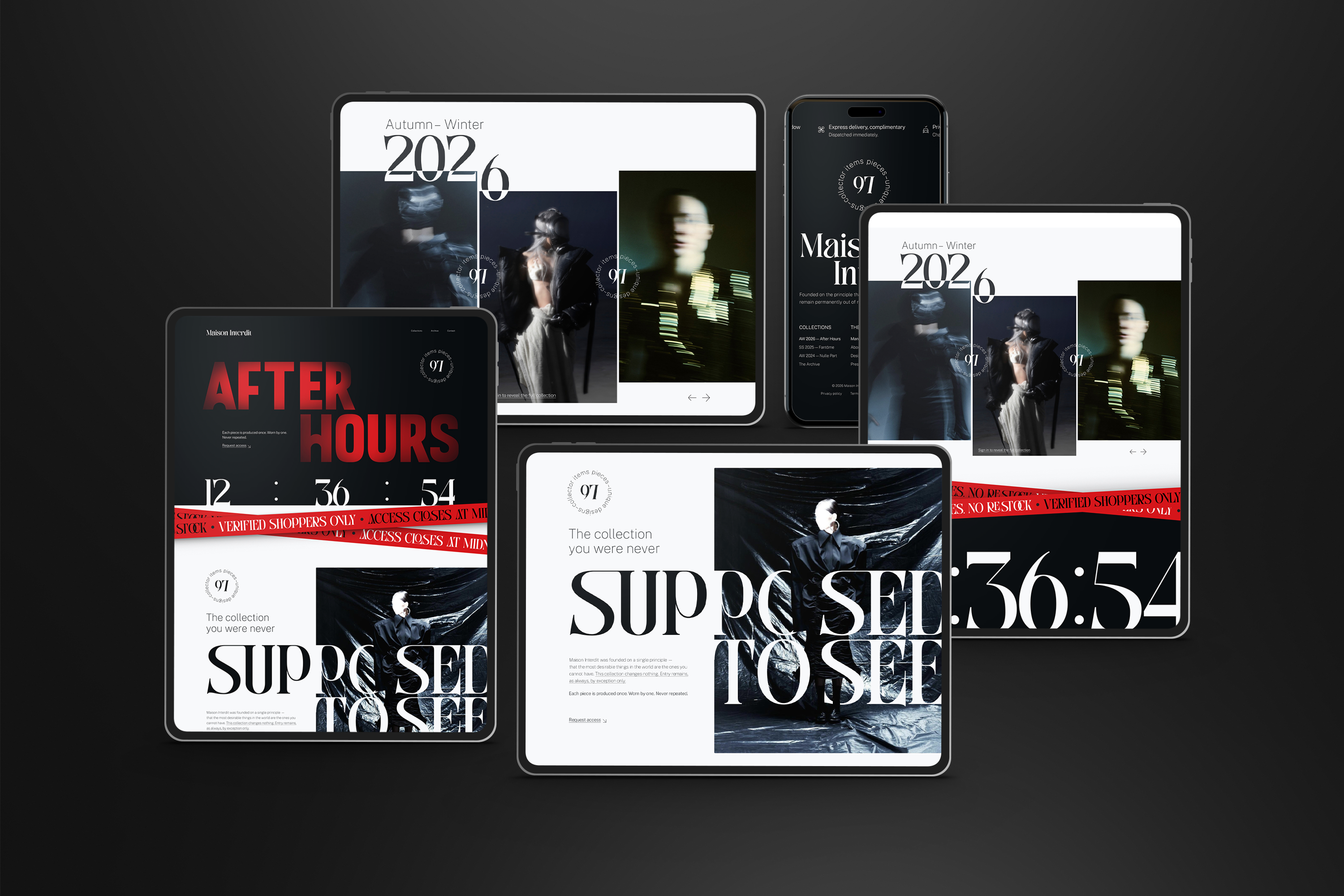
The red tape and motion design
The animated ticker — bold red bands cutting across the screen at an angle, carrying messages like "VERIFIED SHOPPERS ONLY" and "ACCESS CLOSES AT MIDNIGHT" — was the moment the project found its unexpected detail. Police tape. Restricted access. Physical signals of exclusion, translated into a UI component.
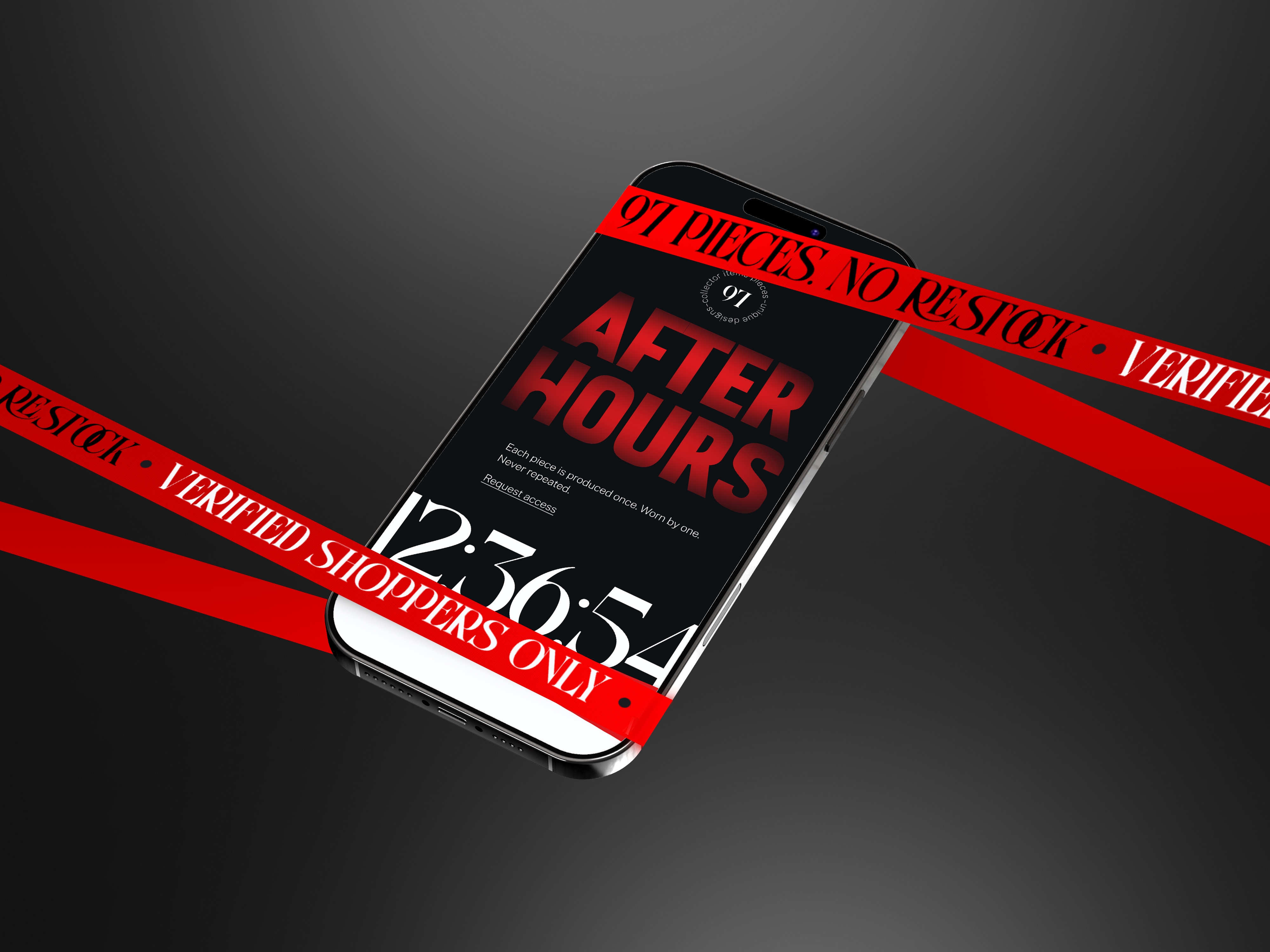
Mobile: designing tension at the thumb scale
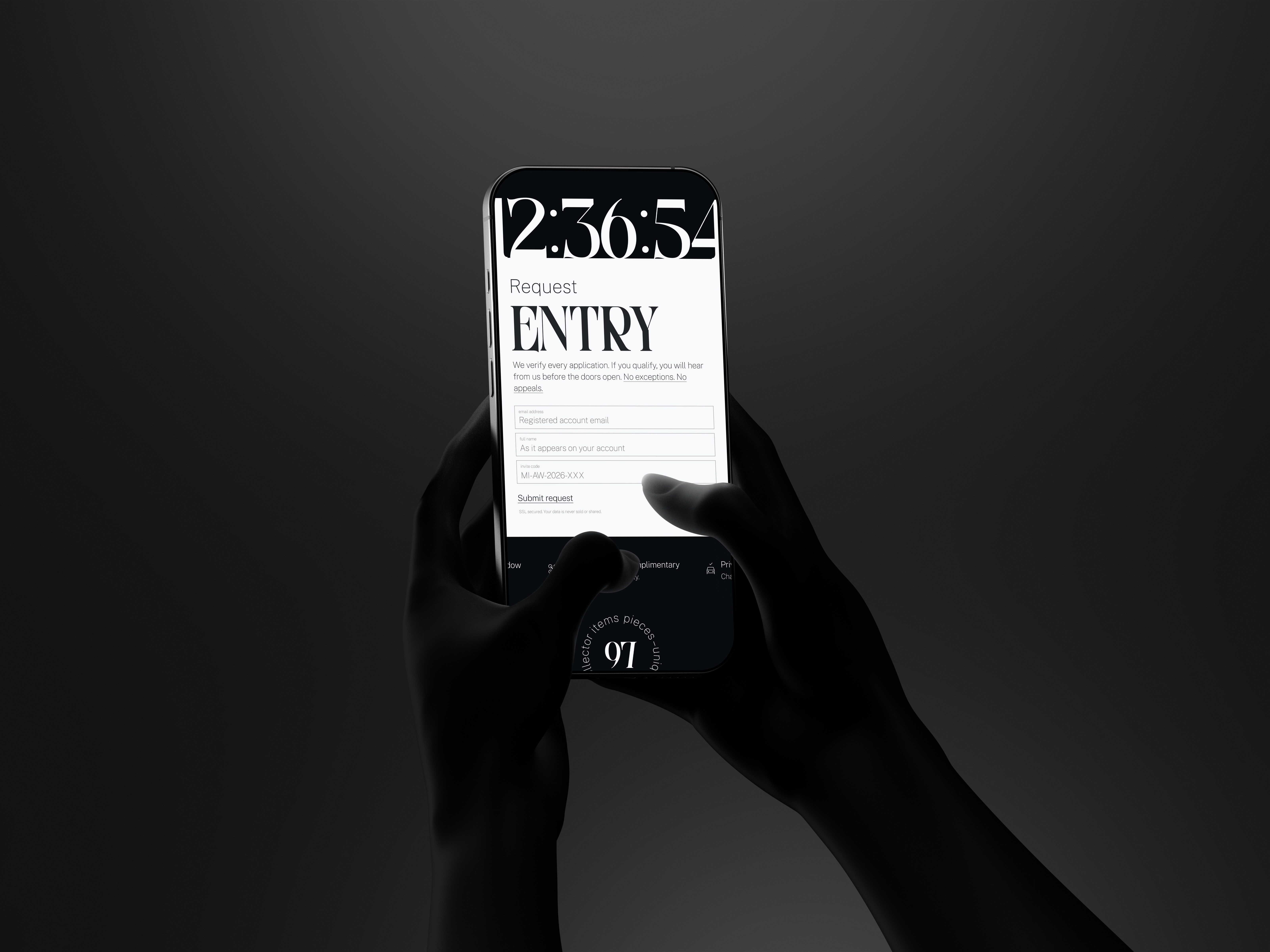
Making this responsive required rethinking several sections from scratch rather than simply scaling down. The hero type stacks vertically and fills the viewport edge-to-edge — arguably more impactful o mobile than on desktop. The countdown bleeds into the top of the form screen, suggesting there's something above rather than containing it in a box.
The conversion strategy
There's a marketing argument worth making here beyond the design craft. A page like this targets a very specific type of shopper — someone who self-identifies as a discoverer of exclusive things. The invite code field isn't just a UX device. It's a segmentation tool. The blurred product grid is a deliberate conversion driver: showing that something exists without showing what it is creates a pull that product photography alone rarely achieves.
Tags: landing page design, fashion UI design, luxury e-commerce design, editorial web design, DailyUI challenge, conversion optimisation, motion design, mobile-first design, Figma, creative direction